

Outdoor Fridges: The Cooling Architecture Decides the Product
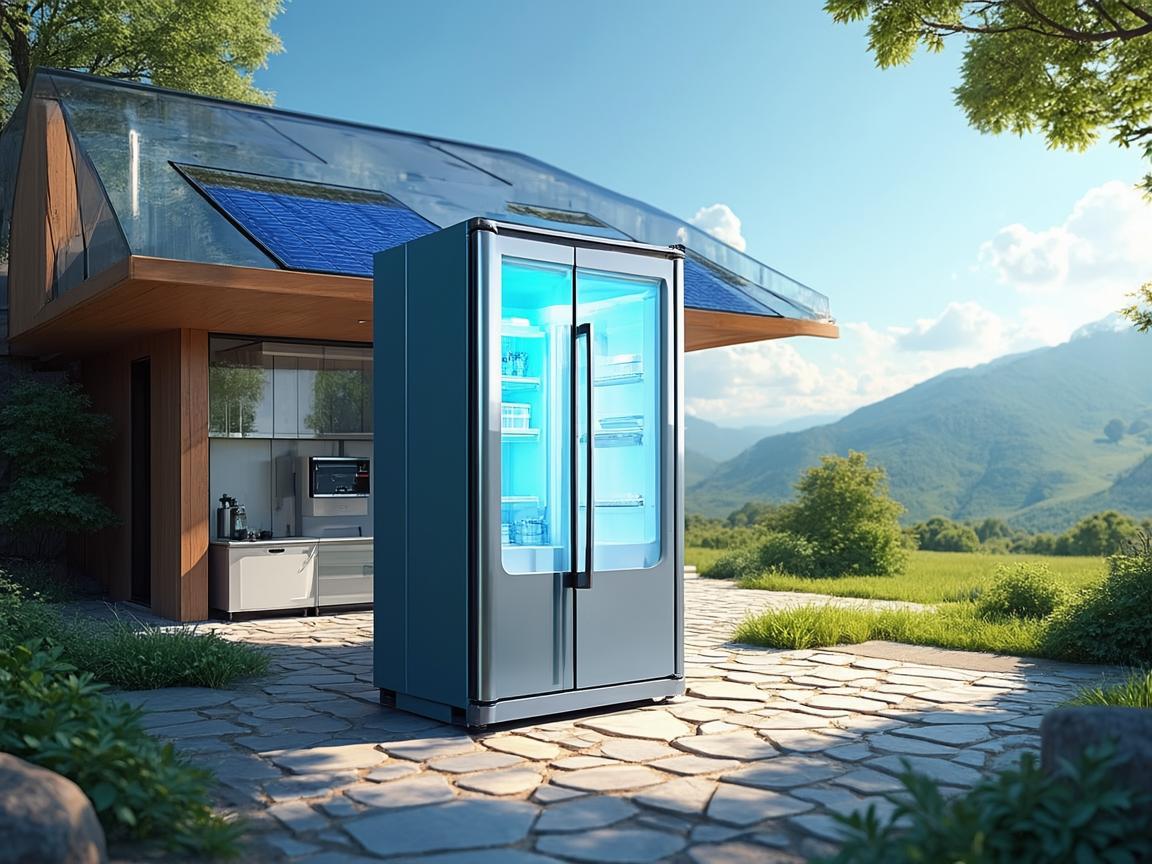
The outdoor fridge — 户外冰箱 in the Chinese product and supply-chain vocabulary — has quietly become a serious hardware category rather than a cooler with a fan bolted on. It is now expected to hold setpoint in a truck bed at high ambient, run from a vehicle circuit or a portable battery, survive dust and vibration, and look credible next to a branded awning. For product, brand and engineering leaders, one decision shapes everything downstream: the 制冷 architecture. Compressor, insulation and power electronics determine weight, noise, pull-down time, cost and warranty exposure. Everything else is design.
The category has split into three engineering tiers
Outdoor refrigeration is not one product. It is three, and each carries a different cost structure and a different set of engineering risks.
Compressor refrigerators: the reference design
Brushless DC compressors running on 12V or 24V, with R600a or a low-GWP alternative, sit behind most premium products. They deliver real pull-down, hold temperature against high ambient, and run efficiently at steady state because the compressor cycles rather than running continuously. The trade-offs are concrete: start-up current, acoustic signature, vibration isolation, and a control board that must manage compressor protection, fan speed and battery cut-off. This is where most of the engineering budget belongs.
Thermoelectric coolers
Peltier units are inexpensive, have no moving compressor, and are simple to manufacture. They are also limited: a fixed delta below ambient, poor efficiency at high ambient, and no ability to hold a low setpoint inside a hot vehicle. They suit short-trip, price-led products and drink chillers. A brand positioning them as outdoor fridges without acknowledging those limits will lose in reviews.
Passive and hybrid
High-performance insulation with phase-change material, sometimes paired with a small compressor, covers the expedition and medical-transport edge. It is a niche, but a defensible one, and it is where insulation engineering earns its keep.
Cooling is a system, not a component
Buying a compressor and a control board is the easy part. Performance comes from how the subsystems interact.
Compressor and refrigerant selection
Capacity must be matched to box volume and to the pull-down you intend to claim at a stated ambient. An oversized compressor adds cost, mass and noise; an undersized one runs continuously and never reaches setpoint in a hot car. Refrigerant choice now intersects with regional regulation, so confirm target markets before locking a platform.
Insulation and the gasket line
Wall thickness, foam density and lid gasket compression decide how much of the compressor work survives the night. Vacuum insulation panels raise performance per millimetre but add cost and handling risk. The gasket is the cheapest place to lose a sale: a lid that seals on a bench but leaks after a season of UV exposure shows up in 24-hour energy figures and in reviews.
Power electronics, dual battery and low-voltage protection
Users will run these from a starter battery. Low-voltage disconnect is both a safety feature and a marketing one, because it protects the vehicle and is a specification worth stating clearly. Dual-zone models need independent control loops; solar-ready inputs need MPPT handling and reverse-polarity protection. These are firmware and validation problems, not tooling problems.
Acoustics, vibration and ingress
A compressor in a metal box at two in the morning in a campsite is a design failure. Mount design, decoupling and fan blade selection matter as much as the compressor itself. Ingress, drop and vibration testing should be defined against realistic use rather than a datasheet claim.
The specifications buyers actually compare
Comparison tables and long-form reviews have converged on a short list. Design to it deliberately and publish it honestly.
Usable volume against external footprint — the ratio that decides whether it fits behind a seat.
Pull-down time at a stated ambient — without the ambient, the number is meaningless.
Energy per 24 hours at a stated setpoint and ambient — the figure that determines battery sizing.
Noise at one metre — increasingly quoted in reviews and increasingly decisive.
Dual-zone independence — whether each compartment holds its own setpoint or merely shares airflow.
Voltage range and cut-off behaviour — 12V and 24V compatibility, and what happens on deep discharge.
Connectivity — app telemetry differentiates, but only when the firmware is stable.
Turning a China-built platform into a brand you can defend
Most outdoor fridges sold globally are engineered and manufactured in China, and the supply base is mature. The strategic question is where you choose to sit on the platform curve.
Platform or bespoke
A proven platform shortens time to market and reduces validation cost, but weakens differentiation. A bespoke shell around a validated cooling module is usually the better trade: differentiate where the customer sees and touches, standardise where certification is expensive.
Certification ownership
Refrigeration appliances fall under household-appliance safety standards in most markets, with additional requirements for vehicle use, batteries and EMC. Own the certification files rather than just the certificate. The test reports are what let you enter a second market without repeating the whole programme.
Warranty and service
Compressor failures are rare but expensive to service remotely. Designing for field-replaceable control boards and publishing diagnostic codes lowers the cost of the failures you will have.
Documentation and labelling
Energy labels, refrigerant markings, battery transport documentation and translated warnings are where importers lose weeks. Treat them as part of the product, not as paperwork.
A practical sequence
Define the ambient and the use case first. Choose the cooling architecture against that definition. Validate insulation and power electronics as one system, at the ambient you intend to publish. Then build the brand story on numbers you can defend. In 户外冰箱, the 制冷 design is the product; colour, handles, app and packaging are how you explain it.
Comments (0)
No comments yet. Be the first to share your thoughts.